Exploring the Cosmic Canvas: A Journey Through Helix Nebula and Beyond
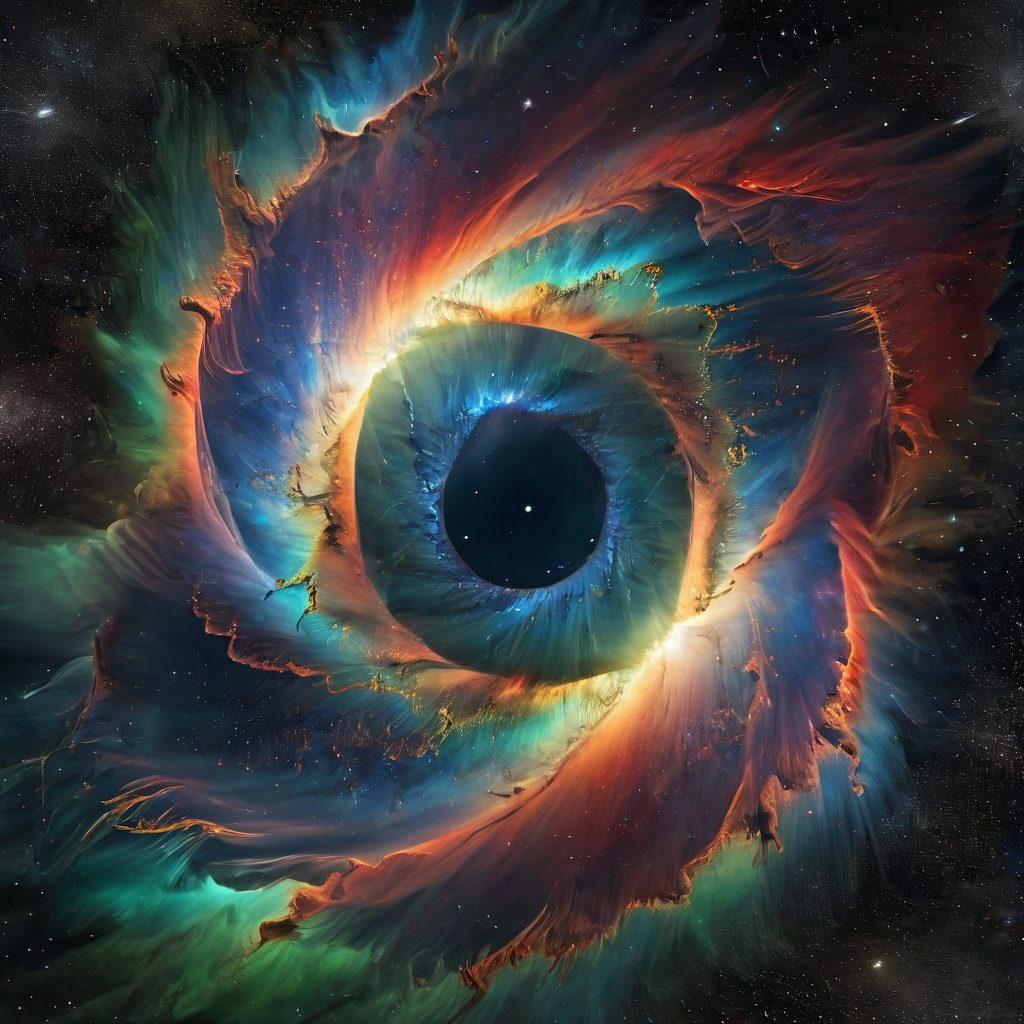
Welcome to a world beyond our wildest dreams, where colossal clouds of gas and dust paint the cosmic canvas in hues of blue and red. The Helix Nebula, often referred to as the 'Eye of God,' is one of the most stunning celestial objects known to mankind. It serves as a dazzling reminder of the magic that exists in our universe—one full of astronomical phenomena that inspire awe and curiosity. What lies behind its shimmering beauty? What secrets can it tell us about stellar systems and the broader universe exploration? Join me on this journey as we unveil the mysteries of the Helix Nebula.
Spanning over 650 light-years away and situated in the constellation of Aquarius, the Helix Nebula is a remnant of a dying star. Its intricate filaments and striking colors are not just a feast for the eyes but are also rich in scientific knowledge. Within this swirling dance of gases, the star formation narrative takes center stage—elements scattered across the interstellar medium from this once vibrant star now contribute to the genesis of new celestial bodies. As we ponder over these cosmic events, one can’t help but ask: how does something so beautiful also signify the end of a stellar life?
Through the lens of observational astronomy, the Helix Nebula provides insight into the broader field of space science and cosmology. Researchers have frequently employed advanced telescopes to study its structure and evolution, contributing to the astrophysical research that helps us understand the lifecycle of stars as they transition from one phase to another. Unraveling the intricacies of the Helix Nebula allows us to grapple not only with its existence but with the implications it holds for the formation of exoplanets and understanding galactic structures. Isn't it incredible how a mere collection of gas and dust can expand our minds to the vastness of space-time?
For space enthusiasts and budding astrophysicists, the Helix Nebula's complexities offer a treasure trove of learning. Blogging about discoveries related to such awe-inspiring entities can ignite a passion for the universe. By delving into various aspects of this nebula—its formation, the science behind its mesmerizing colors, and its place in the cosmos—one can not only educate but also inspire others to appreciate space exploration. Have you ever thought about starting your own blog to share your fascination with the universe?
As we continue to delve into the mysteries of the Helix Nebula, it’s easy to become enchanted by the idea that our universe is full of wonders waiting to be uncovered. Each piece of scientific research expands our understanding and adds depth to the narrative of our cosmic lineage. Learning about such celestial marvels is not just for astronomers but for anyone willing to dream big and look up at the stars. So, are you ready to embark on this journey of discovery and contemplate the profound mysteries locked within the universe?
From Stardust to Galaxies: Insights into Cosmic Events and Galactic Structures
Imagine standing beneath a starry sky, the vastness of outer space looming above you, teeming with celestial objects that have inspired wonder and curiosity for centuries. Each twinkling pinprick of light tells a story of immense cosmic events, from the birth of stars to the formation of galaxies. This journey from stardust to galaxies ventures deep into the heart of cosmology, revealing the intricate and awe-inspiring frameworks of our universe, starting with the captivating Helix Nebula, often described as the eye of God. Have you ever stopped to ask yourself what lies beyond the stars?
The Helix Nebula is a spectacular reminder of the life cycle of a star. As a planetary nebula, it forms when a star exhausts its nuclear fuel, shedding its outer layers into the interstellar medium. This transformation highlights the dynamic nature of stellar systems. Did you know that the Helix Nebula is one of the closest nebulae to Earth, located only about 650 light-years away? Its vibrant colors and intricate structures serve not just as a canvas of beauty but as vital subjects for scientific research, enhancing our understanding of star formation and astronomical phenomena.
As we delve further into the universe exploration, we encounter a vast array of galactic structures. Galaxies, whether spiraled like a whirlpool or elliptical like a cosmic egg, house billions of stars and potentially countless exoplanets. The processes driving their formation and evolution can often seem beyond our grasp. But through observational astronomy, we are beginning to unlock the mysteries of these colossal entities. One pressing question that intrigues researchers is how different galactic structures affect the possibilities for life to exist within their stellar environments. What sort of conditions would make an exoplanet flourish?
Space science invites us to look at the universe not just through the lens of telescopes, but also through the principles of quantum cosmology. With breathtaking advancements in astrophysical research, we can now study distant cosmic events that shaped the early universe and led to the intricate tapestry we see today. Consider the Big Bang—an explosion of energy and matter that gave birth to space-time as we know it. This monumental event not only created galaxies but also gave rise to everything from the smallest particles to the largest structures in existence. Understanding this helps us appreciate our place within the ever-expanding universe.
As we ponder our existence in the cosmos, it's essential to reflect on how space exploration has changed our perspective on life and our home planet. Blogging about these discoveries, sharing insights on stellar formations, and engaging in discourse around the mysteries of the universe can fuel our collective curiosity and passion. The beauty of space is that it beckons us to dream big and aspire to understand the unimaginable. It asks us how we might contribute to the ongoing exploration of the universe, and whether we might be the next storytellers of our own cosmic saga. What discoveries await us at the edge of the known universe? Our journey has only just begun.
Navigating Through Space-Time: The Role of Observational Astronomy in Understanding the Universe
Navigating the vast expanse of the universe is akin to trying to decipher an intricate symphony, with each note representing a different cosmic phenomenon. As we delve into the realm of observational astronomy, we uncover the secrets of celestial objects that light up the night sky. One such stunning marvel is the Helix Nebula, often dubbed the "Eye of God" due to its remarkable appearance. But what does it take to truly understand these astronomical treasures? This journey through space-time reveals the profound role that observational astronomy plays in illuminating our understanding of the universe.
The first step in our cosmic adventure is to recognize the importance of observational astronomy in the exploration of outer space. Through telescopes and advanced technological instruments, astronomers capture data that helps us make sense of the myriad of celestial objects scattered throughout the cosmos. Have you ever gazed up at the stars and wondered about their stories? Each star, each galaxy, and every nebula holds secrets about the formation of our galaxy and the broader universe. This is where the beauty of space science lies: through meticulous observation, we glimpse the processes of star formation, cosmic events, and the intricate dance of galactic structures.
As we navigate through the wonders of astrophysical research, one startling question arises: how do we know what we know about the universe? The answer often lies within the heart of institutions dedicated to scientific research. These observatories capture light from distant stars and galaxies, decoding information encoded in that light. From mapping the interstellar medium to discovering exoplanets in distant solar systems, observational astronomy provides the foundation upon which our understanding of cosmology is built. Every photograph of the Helix Nebula or a Supernova event isn't just a pretty picture; it represents years of learning, experimentation, and discovery.
Let’s take a moment to reflect—how often do we consider our place in the vast, grand design of the universe? Observational astronomy dares us to push the boundaries of our knowledge, inviting us to explore the unfathomable depths of space-time. Moreover, it evokes a sense of wonder and curiosity in every citizen scientist and blog writer yearning to contribute to universe exploration. With the rise of citizen science, the public can engage meaningfully with astronomical phenomena, breaking down barriers once reserved for those in observatories. Each blog post, each shared image, and every engaged conversation holds potential to ignite the flame of discovery in someone unfamiliar with the beauty of space.
In conclusion, as we traverse the cosmos through the lens of observational astronomy, one truth resonates profoundly: understanding the universe is a communal journey. The Helix Nebula and other celestial wonders stand as beacons of hope, illuminating our quest to understand the universe we inhabit. So next time you gaze at a sky full of stars, ask yourself this: what stories do they hold? As we collectively navigate through space-time, every query is a step closer to unraveling the mysteries of our existence in this beautifully complex universe. Remember, each observation brings with it the opportunity to discover not just the cosmos around us, but also the vast potential within ourselves.]}
seeking knowledge about the stars can lead to a deeper connection with our own life journeys. As we lift our gaze to the heavens, let curiosity guide us on the thrilling adventure of becoming explorers in our own right.